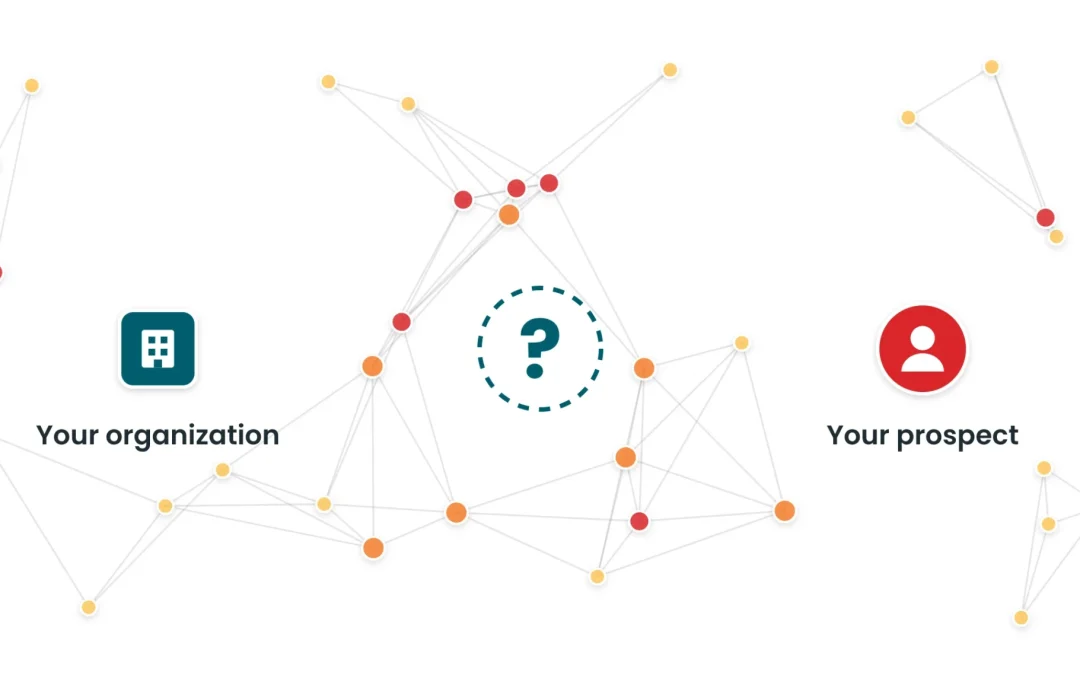
You know who you want to meet. The harder question is who can introduce you.
Relationship Mapping shows you a prospect’s network. Relationship Paths answers a narrower question: how do you get from here to there?
Relationship Paths puts our relationship data to its most direct use. Name the person, company, charity or foundation you want to reach, and CharityCAN returns every connection path the records support.
Start From a Person or an Organization
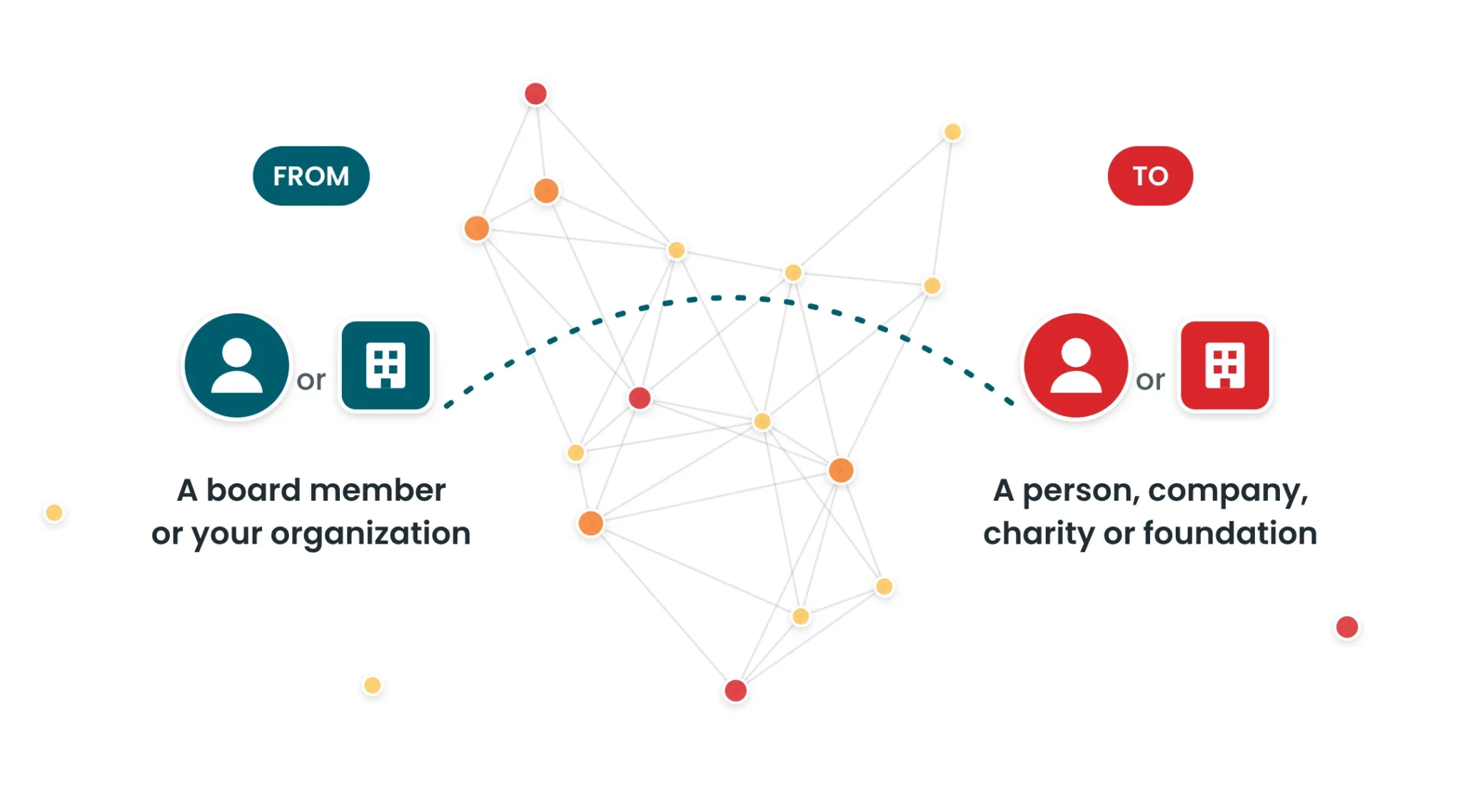
Every path has two ends. On one end is someone or something on your side: a board member, a volunteer, a staff lead or your own charity. On the other is the person, company, charity or foundation you hope to reach.
Choosing both ends is the point. Instead of browsing a prospect’s whole network, you are asking a specific question about a specific pair.
Between Two People, It Finds the Seats They Share
When both ends are people, Relationship Paths looks for the boards they have in common. That includes charity boards drawn from T3010 filings, plus corporate boards and executive roles from Canadian corporate records.
A board chair and a prospect who both sat on the same hospital foundation board share more than a line on a résumé; they spent years in the same meetings.
Between Two Organizations, It Finds the People They Share
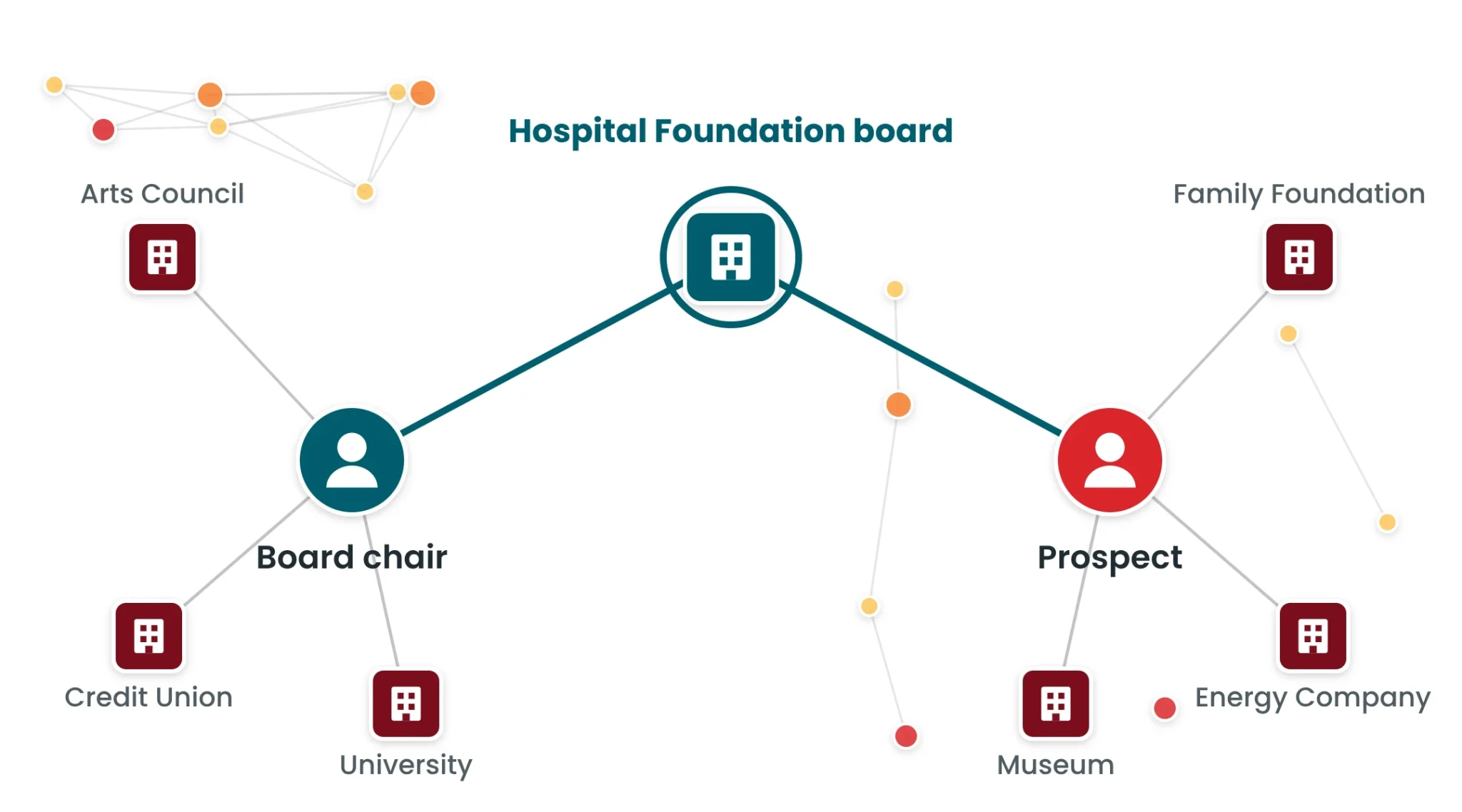
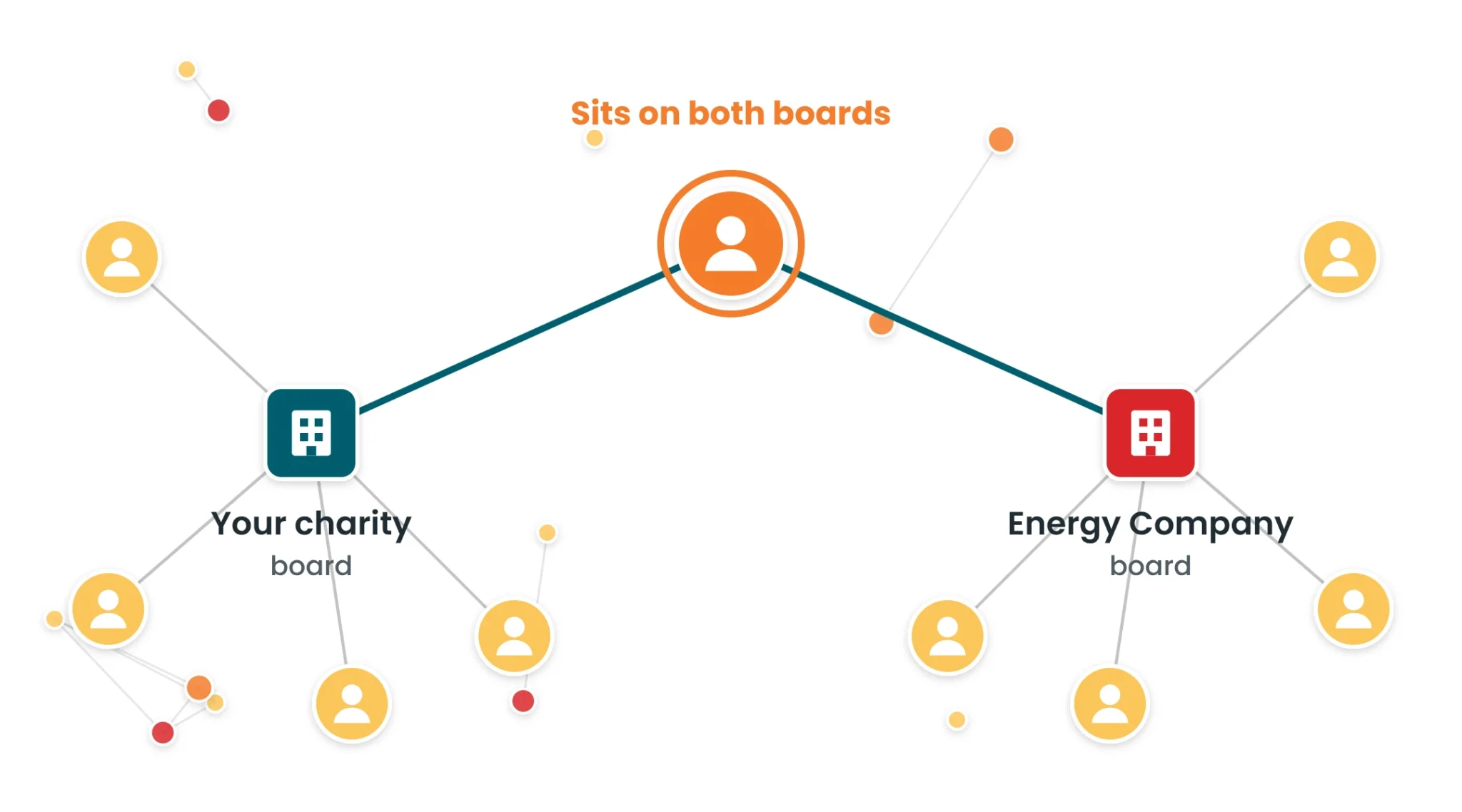
Relationship Paths also works from organization to organization. A director who sits on a company board and a charity board connects the two, whether those organizations are companies, charities or foundations.
This is useful for corporate and foundation prospecting. Your own charity’s board, or the board of a partner organization, may already include someone who sits at the table you are trying to reach.
Then It Checks That They Served at the Same Time
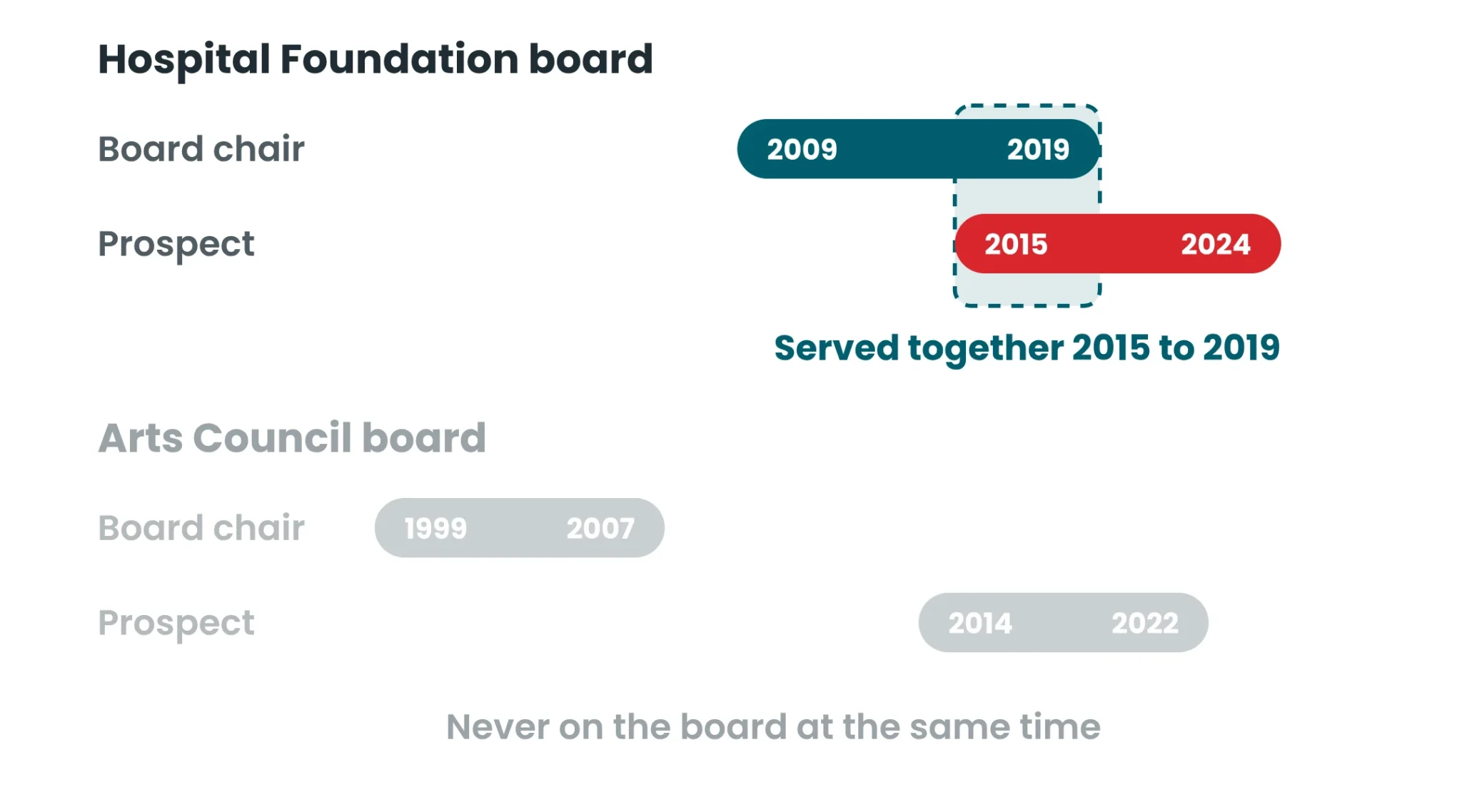
Two people on the same board ten years apart never met. A shared board only matters when the terms overlap.
Relationship Paths compares service dates and keeps the links where people held their seats at the same time. Overlapping dates are what make a link worth using.
No Direct Link? It Finds Someone in the Middle
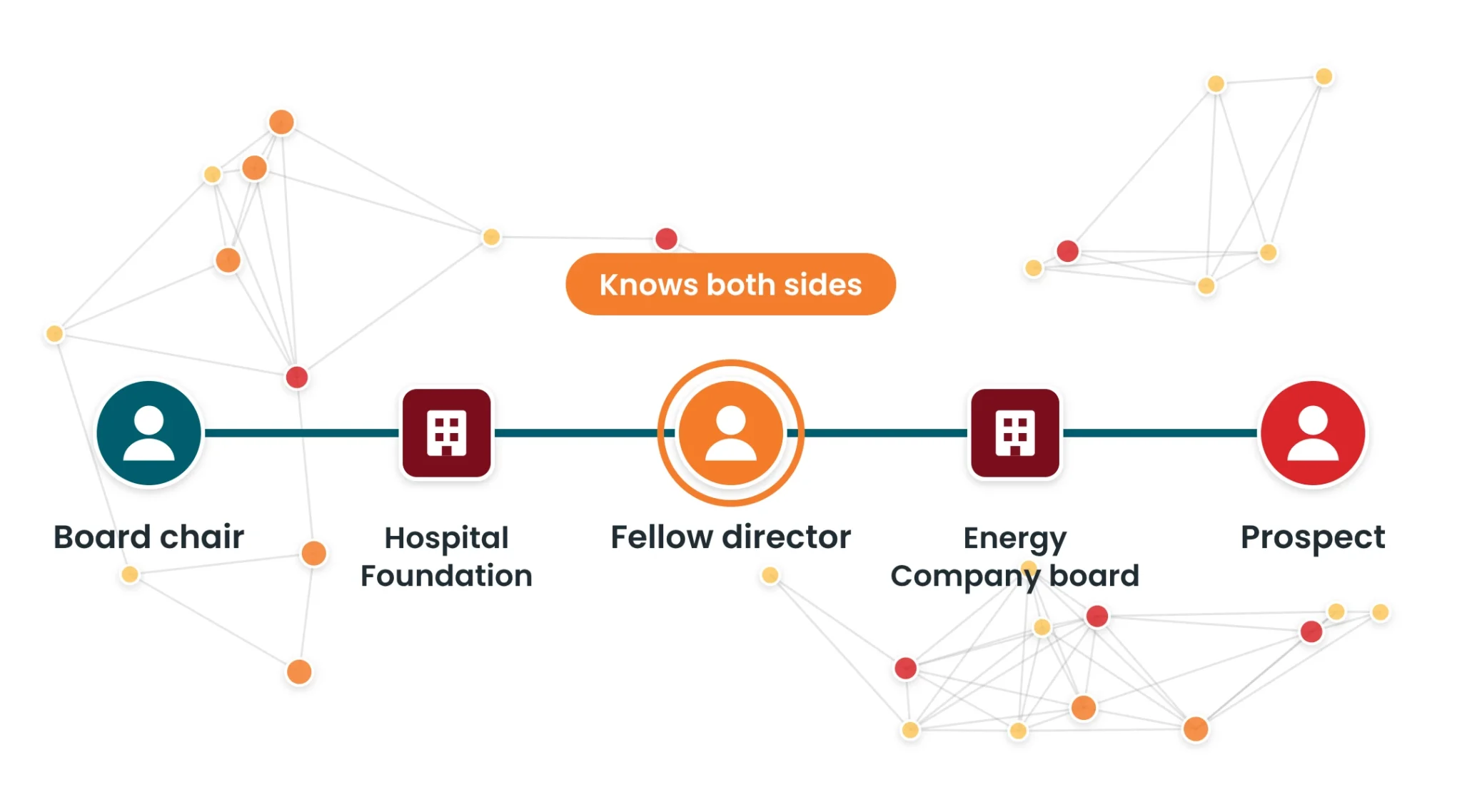
Many prospects have no direct connection to anyone on your side. Relationship Paths then looks one step further, for someone who knows both.
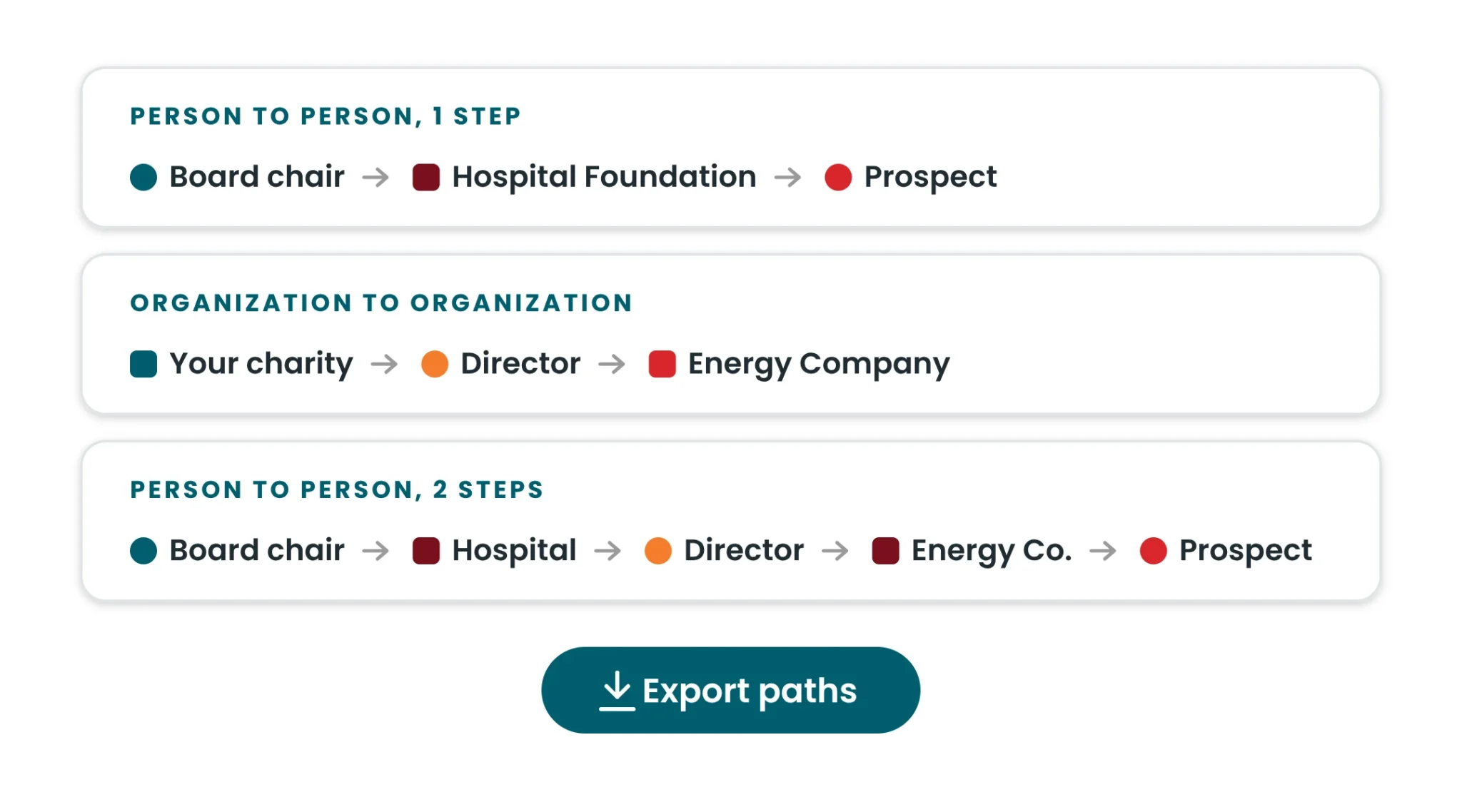
A path might run from your board chair, through a hospital foundation board, to a fellow director, and from that director through an energy company board to your prospect. Paths can run through people and organizations alike; a fellow director who knows both sides is often the best introduction you have.
Every Path Is a Question for Your Board
A path is only useful once someone acts on it. A practical way to put Relationship Paths to work:
- Pick your targets. Choose the prospects, companies or foundations you most want to reach this year.
- Run the paths. Start from your board members, volunteers and your own organization.
- Export the results. Bring the list of paths to your next board meeting.
- Ask for the call. Go through each path and ask who knows the person in the middle and is willing to make an introduction.
The data finds the connection; your board turns it into a meeting.